Sunday, December 4, 2016

Final Reflection

When I first applied to be a student teacher, my teaching philosophy was the following: All students should have an equal opportunity to learn to the best of their abilities in a student-centered, constructivist classroom environment.  After student teaching, I am happy to say that this is still my philosophy.  What I have learned is that this is easier said than done.  Giving every student an equal opportunity to learn can be quite difficult when you have 30 students in your classroom and each of them has different needs. Not to mention that this is only one of your 6 classes, resulting in a total of roughly 180 students, and they are all unique individuals who have different needs to thrive in your classroom.

One of the best ways that I have found to handle this is to give as many outlets to show learning as I possibly can.  Some students can show their learning well through a quiz, but others might need an essay, or a conversation.  Some students thrive during groupwork, others like to work on their own, and some prefer to listen to the teacher talk through class.  During my student teaching, I have given my English students many different outlets to show their learning because I know that just because one student doesn’t do well on a quiz doesn’t mean that they haven’t learned the material.  I think that this way of handling a classroom really helps each student have an equal opportunity to learn, without putting undue stress on the teacher.

I feel that two of my student teaching goals fall under the category of giving students an equal opportunity to learn: to exercise patience when dealing with students who do not listen well, and to be willing to deviate from the plan when students need specific help. Though these are both goals that I will continue to work towards throughout my teaching career, I feel that I have gained valuable perspective and experience with both during the last 3 months of my student teaching. As my relationships with my students have grown, so has my willingness to put myself in their shoes and understand where they are coming from.

The last goal I had for my student teaching was to plan and implement assessments that match the learning targets for any given lesson.  I feel like I have come far in this area, but still have some work to do.  When planning lessons, I often decide the assessments before I decide the learning targets, so they both match up, but I haven’t planned an assessment for the learning target. I could still use some work in this area, but I’m confident that as I plan more lessons, my skills will become better and better.


My cooperating teacher said something at the beginning of this semester that has stuck with me: yes, it is our job to teach students how to write an essay, take a test, analyze a novel, and so on, but all of these responsibilities are secondary.  It is our primary job to teach students how to be good people.  My educational experience over the last 4 years has shown me the same thing.  As teachers, we should take care of our students and help them grow as individuals.  Not much has changed about my teaching philosophy, but I wish to add two words to try and encompass that sentiment: All students should have an equal opportunity to learn and grow to the best of their abilities in a student-centered, constructivist classroom environment.

Video Critique 2

Video Critque


What are my strengths?


While I am reading to the class, I speak loudly and clearly so everyone can hear. I do the same when I am giving directions to students. A lot of the time I walk around the classroom to check on how students are doing while they are having group discussions or doing individual work. I am there to answer questions when they are asked. Students are quiet and respectful while I am talking, and if they aren't I wait for them to stop talking and don't just talk over them. While I am reading, students are following along in the book even when I am not watching them.


In what areas do I need to improve my instructional delivery?


For the first half of class, I am sitting down on a stool at the front of the classroom. This is fine while I am reading to the class, but I give them a few instructions without standing first, and I think it is easier to ignore the instructions of a teacher who is sitting than one who is standing. I start standing while giving instructions during the second half of class. Students were chatting while they were getting out their books; this causes the transition to move slowly and wastes instructional time. While I am reading to the class, I am often fidgeting with my feet or putting my hair behind my ears. Although most students are looking at their books and not at me, this could be distracting to them.


How will I improve my teaching effectiveness?


When everyone goes around the room and says a word about how they are feeling, I noticed that it is almost impossible to hear them at the back of the classroom. If I did this lesson or one like it again, I would have everyone stand in a circle facing each other to say those words, that way it would be easier to hear everyone speak.I should make sure that I am always standing while giving instructions, so that students know to pay attention. I will try to stop fidgeting while I am at the front of the classroom. I hope to find a way to improve transition time so it doesn't waste so much time in between activities.

Lesson Plan:

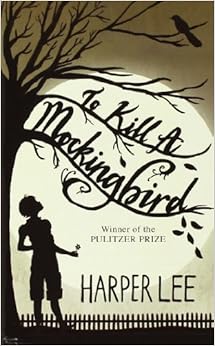
To Kill A Mockingbird Ch 21 and Iceberg Activity
Learning Targets:
  • Students can understand that multiple factors influence decisions.
  • Students can recall important historical information that influences the plot of TKAM.
  • Students can understand the reason that Tom Robinson was convicted.
10 minutes Journal: Oftentimes, there are many different factors leading up to one decision. Write about a time you made a particular choice that was greatly influenced by multiple factors. What were they? Would an outsider be able to tell all the reasons you made the choice you did? What factors could have led you to make a different choice? Example: When I graduated from high school, I chose to go to college in Missoula. This was influenced by multiple factors: the school I really wanted to go to I couldn’t afford without student loans, I got a scholarship if I stayed in Montana, I didn’t want to go to Bozeman because it was too close to my parents, UM has a good English program, one of my best friends was already in Missoula, part of me was afraid to move too far away from my family, etc.

Read: chapter 21 to class. (30 minutes)


Journal: After reading, students should take about 5 minutes to reflect in journals about their thoughts and feelings about the outcome of the trial. Then, circle 2-3 words in their reflection that capture their feelings about the outcome of the trial.Share: Go around the classroom and each student will share one word that sums up their feelings about the outcome of the trial.
Iceberg Activity:

Draw iceberg on board. In the tip, write the following questions: What happened? What choices were made in this situation? By whom? Who was affected? When did it happen? Where did it happen?

Explain that an iceberg is bigger below the surface of the water. Say that the facts about the trial outcome that they write in this section are things that the public can see.

Handout iceberg diagram and ask students to list everything they know about the facts of the trial outcome in the "tip" area of the iceberg. They should answer the questions written on the board. (5 minutes).

At tables, students should share what they have written in the tip of the iceberg.

Now explain that what is below the surface of the water can be much more influential that what is on the tip. These are things that the public cannot "see" that influenced the outcome of the trial.

Write the following questions below the surface of the water: "What factors influenced the particular choices made by the individuals and groups involved in this event?"

Ask students to think about what caused the outcome. Factors might include events from the past (i.e. the great depression, jim crow laws, segregation) or aspects of human behavior (fear, obedience to authority, conformity, opportunism). Students should work on these alone for 5 minutes, then work together with their tables for an additional 5 minutes.

Ask for some answers to write on the board.

Assessment: Exit Ticket: How does the information in the iceberg help you better understand why Tom Robinson was convicted?

Saturday, December 3, 2016

Assessed Samples of Student Work

For my pre-assessment tool, I decided to give my sophomore English students a timed writing sample before I instructed them on timed writing. For this sample, I asked students to answer the question “Should our high school transition to wall-to-wall career academies?”. I gave them a brief explanation of what wall-to-wall career academies were, as well as showing them a short video. Then I provided them with a rubric for their writing sample, the prompt, and 20 minutes to write an essay.
Rubric for Timed Essays

The following is a sample of one of my student’s writing for this pre-assessment. I will refer to this student as Student A from now on.
Student A Pre-Assessment Writing Sample


 When I graded these pre-assessments, I looked for the following skills:
• Ability to develop a thesis that makes a claim
 • Consistent argument throughout writing
 • Two or more reasons that student made the claim they did
• Evidence (logic and reasoning) to support their reasons
• A conclusion that wraps up the paper and restates the claim
• Logical organization and the use of paragraphs and transition sentences
• Correct grammar and sentence structure

Looking at Student A’s writing sample, I determined that they made a claim, “a wall to wall academy is not a good idea for the students.” This claim answered the question in the prompt and took a side on the argument, but it was not a developed “thesis” that gave the reader a glimpse into what the paper would be talking about. Student A had a consistent argument throughout the writing that all focused around the fact that career academies would not be good for the students. They gave three reasons why they thought that career academies should not be put into place at the school, and included logic and reasoning based on these reasons. The conclusion was not well-developed, simply stating: “these 3 reasons are why I don’t think [our school] should have wall to wall academys.” Even though this conclusion restated the claim, it was vague and did not leave a strong impression on the reader (it is possible that the student ran out of time to finish the conclusion). The organization of this paper was mostly logical, but the first reason was in the same paragraph as the introduction instead of starting a new paragraph, and transition sentences were only in some places. Student A had many grammar mistakes, including misspellings and not capitalizing the first word of each sentence, but their sentence structure was well done. This student earned a 3 out of 4 on the rubric for their timed response. I determined that Student A’s areas of need were: writing a thesis, writing a conclusion, organization and transition sentences, and grammar.

 After reviewing all of the students’ essays, I chose to teach them something called the ABCD Method of Attacking a Prompt, a strategy for timed writing. This strategy provided simple ways to decipher what a prompt was asking of you, brainstorm possible answers, make an outline for your response, and then proofread what you have written.
ABCD Timed Writing Strategies

Below are the Standards for this lesson.

College and Career Readiness Standards for Writing:


  • W.9-10.1: Write arguments to support claims in an analysis of substantive topics or texts, using valid reasoning and relevant and sufficient evidence. 
  • W.9-10.4: Produce clear and coherent writing in which the development, organization, and style are appropriate to task, purpose, and audience. 
  • W.9-10.10: Write routinely over extended time frames or shorter time frames (a single sitting or a day or two) for a range of tasks, purposes, and audiences. 


For the post-assessment, I slightly altered the same prompt, asking students to: Consider the advantages and disadvantages of switching to career academies, then make a claim about whether or not [our school] would benefit from having wall-to-wall academies. Support your claim with logic and reasoning.

Because students were given the same amount of time, but now had more tools to work through their pre-writing process, most students were not able to completely finish their writing in the time allotted. The following is Student A’s post-assessment writing sample.


Student A's Post-Assessment Timed Writing
Student A's Post-Assessment Brainstorming


Reflection: 
I believe that the lesson I taught between assessments was very helpful for students to organize their thinking and improve their timed writing strategies. I wish that I had given students more time to work through their post-assessment writing, and I will be going back with them to give them more time to finish their responses. I think that giving them a timed writing sample without teaching them first was a good idea, as I was able to measure what skills they came into the classroom with and determine what they needed to know. Because of this, I will be able to make small groups for working on specific goals so that not everyone has to learn all of the same things if some students have already mastered the skill. Going forward, I would like to spend more time teaching thesis strategies to my students, as well as teaching them the skills to take the strategies they have learned for writing timed essays and adapt those for essays that require outside research and revision.

Sunday, October 16, 2016

Midterm Reflection

So far in my student teaching experience, I have met with many various challenges and I feel that as a whole I have been able to solve these challenges in an effective manner with the help of my cooperating teacher. There are still many areas where I need to continue to grow in my knowledge and ability, and I will keep working toward my goals as the rest of the semester progresses.

Goal 1:    Plan and implement assessments that match the learning targets for any given lesson.

I have not had a ton of opportunities to plan and implement my own lessons so far this semester, as I am just now transitioning into planning lessons without the guidance of my cooperating teacher.  I have often taught a lesson that my cooperating teacher has planned, which I feel I have implemented well for the most part. There are usually small things that I notice while teaching that I wish I would have done better, such as the phrases that I use when instructing students to do something, which I tend to phrase as questions instead of commands. When I teach the same lesson to two different classes, I notice a significant improvement in my instruction for the second class, so I feel that I am recognizing these small things that I often mess up on and learning from my mistakes to make my teaching more effective.

I have planned a few lessons on my own, and for these my cooperating teacher has either given me the learning targets, or I have asked if a specific learning target would work for that lesson. Once I planned the lessons, my cooperating teacher then looked them over and provided feedback for what she thought wouldn’t work well. I have been receptive to her feedback and I feel that it makes my lessons better. I still have work to do on the planning of my lessons and assessments, but I feel that I have come far in implementing these lessons effectively and I hope to continue to see improvement before the final.

Goal 2:    Exercise patience when dealing with students who do not listen well.

I still have a lot of work to do in this area, but I think that I have improved a lot already this semester. Especially in Sophomore English, I have many opportunities to deal with students who do not listen well, and for the most part I have not reacted negatively to these students. I still get frustrated when it seems like the entire class is not listening or responding to instructions, but I feel like I have done a good job of not letting this affect my teaching; I do tend to rant about it after school to blow off steam, however.

The biggest problem I have had so far in this area is having large sections of the class not turning in work.  I know that for a lot of these students, grades are not a motivating factor to get their work turned in on time or at all, and I am working on other ways to motivate students to get the work done. The most frustrating experience for me is when I know that a student knows the answers to the questions, but they do not put in the effort to write them down and turn them in, or the student does the work but just never turns it in because they do not care enough.  I want the gradebook to reflect the effort that students put into my class, but if they don’t turn in their work, I am unable to give them credit.  I have begun adding more grades for participation and classwork so that these students who are consistently on task yet turn nothing in are still getting credit.  I also check up on students who don’t turn work in to see if they have anything ready, and I have recently begun implementing goals for students who have a large amount of missed assignments to help them become motivated to turn work in, but I am still experiencing problems.  I hope to continue to grow in this area.

Goal 3:    Be willing to deviate from the plan when students need specific help.


Even though I am working hard on meeting this goal, I still see myself failing in thinking on the spot to rearrange lesson plans at the last minute.  As I continue to grow in my abilities as a teacher, I hope that I will have more tools to think of on-the-spot changes I can make when students are not understanding.  It is a lot easier for me to plan for time before class starts in which I can help students with their needs than it is for me to deviate from the plan in the middle of class.  For example, earlier this week as I was grading chapter questions for To Kill a Mockingbird, I realized that there were quite a few students in one class who weren’t understanding a lot of the deeper points in which Jem realizes something that Scout doesn’t.  I was able to plan a lesson for these students to gain more understanding, and I feel that this worked well. I have more trouble when I don’t have a day to plan between realizing the deficits and teaching the lesson. I hope to find more strategies for last minute changes throughout this semester, with the help of my cooperating teacher and my own additional research.

Saturday, October 15, 2016

Professional Experience Reaction Paper

For my professional experience as a student teacher, I went to a PAC, or Principal’s Advisory Committee, Meeting. During this meeting, other staff members in attendance and I primarily discussed what next steps would be to meet a school goal of more freshman students feeling like they belonged at the school. This was also meant to help students who were failing one or more subject in conjunction with data that showed students who did not feel like they belonged in some sort of group at the school also tended to do poorly in some school subjects.


Staff members shared their thoughts on the goals and topics, and we discussed planning to meet these goals. I was very glad that I went to this meeting, as it provided me with insight on how policy meetings go at the high school level, and what kind of opportunities interested teachers can have in sharing their ideas for how the school can move forward.  Much less staff than I expected attended this meeting, which shows me that teachers have to take initiative in order to have their voices heard in higher policy discussions, but that the opportunities are there if you look for them. 

Volunteer Experience 2

Thank You Letter from 1st Graders
During Spring semester of 2015, I worked with the UM Tutoring Project to volunteer to help students with reading. I was placed in a classroom of 1st graders at an elementary school in Missoula, where I volunteered twice a week for 1 hour during their “Walk to Read” time. During this time, the students were split up into skill-based reading groups.  One group would do independent work, one group would work with the classroom teacher, and I would work with the third group.  This would rotate during our time, so I would work with two groups each time I was there.  They were comprised of the same kids for the first quarter, and then during the second quarter groupings changed as a result of new knowledge the students had, and I worked with two of these new groups for the second quarter. The groups would read a book out loud together, and then we would work on packets of comprehension questions together.

This experience really helped me as a teacher because it gave me a taste of how learning to read can be, which is much different from the reading to learn set up that older grades have. I also worked with groups of students from various different economic and family backgrounds. This experience really opened up my eyes to the possibility that some kids are never read to at home, either because their parents do not have the time, or the resources. Children who do not have the opportunity for an adult to work with them on reading in a small group or one-to-one setting often do not have the same tools in their belt when they are learning to read at school. I was glad that I could provide some of these kids with additional time being read to or with in a group with an adult, as their classroom teachers often don’t have much time to spend working with students who really need the extra tutoring help.

I think that this experience will continue to help my understanding of students with diverse educational backgrounds, and I hope that it will help my instruction of these children to grow and match their specific needs.   

Video 1 Critique and Lesson Plan

Video Critique

What are my strengths?
I use prompting questions when students don’t know the answer right away, or re-word the question if there is confusion. I also speak loudly and clearly so that I can be heard well even at the back of the room. I appear comfortable in front of the classroom. I provide many different interactive components for the students, and give them opportunities to listen, read, write, and engage in conversation before they are assessed on their knowledge.

In what areas do I need to improve my instructional delivery?


I use sentence fillers (um, er, like, so, ok) often while I am speaking. Sometimes I start sentences with phrases such as “why don’t we” or “how about” while giving instructions, which makes the instructions seem like an option. When I gave directions for students to talk at their table, they responded very slowly, showing that I did not adequately prepare them for that transition.

How will I improve my teaching effectiveness?
When I ask a question to the class and no one answers, I need to either provide more wait time, or call on someone to answer. Sometimes I may need to give more specific instructions, and when I ask students to switch from listening to talking, it would be helpful to give them a few minutes to write down their thoughts first, especially so early in the morning. I would also like to focus on using less filler language and not phrasing instructions like a question.


Pathos, Ethos, Logos in Advertising Lesson Plan

Materials:
  • Presentation
  • Pathos, Ethos, Logos cards (one set per table) 
  • Printed ads 
  • Chalk 
  • Notecards (one per student) 
  • Pathos/Ethos/Logos example sentences for quiz 
Length of Lesson:

  • 1 class period (90 minutes)

Activities:

Journal- Students will write in response to the journal prompt: Choose a topic that is important to you. Using a pathos appeal, try to convince an audience of people who knows very little about this topic to agree with you.

Presentation- Teacher will present lesson from google slides on pathos, ethos, and logos, using examples from advertising. This will serve as a reminder of what an author appeals to when using each rhetorical strategy, as well as providing examples for students. After explaining the slide about the three strategies, teacher will show slide with pathos examples, and briefly explain why each advertisement appeals to pathos. This will continue for the next to slides on ethos and logos. (If students are losing interest, show a slide, then have them discuss which strategy it is at their tables before teacher calls on a table to answer and explain why for each advertisement.)

Videos- Teacher will show one video at a time from the last slide of the presentation. Students will briefly discuss at table which strategy they think the ad is using, then hold up a card at the table that says either Pathos, Ethos, or Logos. This will serve as formative assessment/knowledge check.

Printed Ads- Each table will have a small stack of printed advertisements. At their tables, they will discuss which domain (Pathos, Ethos, Logos) they think all of the ads belong to. They will then write down in chalk the domain, and one reason why the ad appeals to that domain next to the advertisement.

Assessment:
Quiz- Teacher will provide students with a sentence. On a notecard students will individually write down the domain and why it appeals to that domain. Repeat for Pathos, Ethos, and Logos example sentences. As an EXAMPLE: "The veterinarian says that an Australian shepherd will be the perfect match for our active lifestyle." So I would write that this sentence is an example of Ethos because it appeals to the authority of the veterinarian, and assumes that vets know a lot about dogs.


Example Sentences-
"More than one hundred peer-reviewed studies have been conducted over the past decade, and none of them suggests that this is an effective treatment for hair loss."
"As a doctor, I am qualified to tell you that this course of treatment will likely generate the best results."
"You should consider another route. I heard that that street is far more dangerous and ominous at night than during the daytime."

Sunday, September 18, 2016

Goals for Student Teaching

1.    Plan and implement assessments that match the learning targets for any given lesson.
2.    Exercise patience when dealing with students who do not listen well.
3.    Be willing to deviate from the plan when students need specific help.

Best Piece of Academic Work and Reflective Essay

A Literacy Photostory: Improving Classroom Literacy Instruction

I feel that my best piece of academic work was the research project that I did during the 2015-16 school year.  This research project took three Missoula high school students and had them take pictures of what they thought of as literacy, and then reflect on the reasons behind it.

As an English teacher, this project really helped me to better understand not only what literacy is, but the possibilities of what it could be.  It helped me to know what high school students thought of as literacy, and what they were being taught.  Because of this project, I think that my students benefit from my enhanced knowledge of what literacy deficits students have during high school, and how these gaps can be filled. Though I have not yet spoken to any of my students about what literacy is, I have already incorporated multiple aspects of literacy into their instruction, including art projects, videos, reading, writing, speaking and listening, and computer practices.  Students need many forms of literacy in order to communicate in the world, and I think that it is important for them to get practice in multiple modes of literacy while they are in high school.

In the future, I hope to also talk to my students explicitly about what literacy is.  In my research, I found that students had only a vague knowledge of the definition of literacy, and often times it was only mentioned in their English classes.  I hope to change this in the future by implementing interdisciplinary lessons that introduce the concept of literacy in classrooms other than just English. I also hope to advocate to my coworkers and fellow teachers about how they can incorporate explicit literacy instruction into any content area.

I believe that this research paper showcases my content knowledge in English for many ways.  For this project, I had to write a literature review for the topic of literacy, which requires the ability to read and analyze the work of others, as well as incorporating these sources into my own academic work. I was also required to conduct interviews with my study participants, which falls into the field of speaking and listening.  My understanding in these areas helped me to not only conduct the interviews, but to do an analysis of them afterwards to incorporate into my paper. I also believe that the paper I did for this project showcases my hard work and ability as a writer.

Kyiyo Powwow Volunteer Experience

48th Annual Kyiyo Powwow Flyer
In the Spring of 2016, I volunteered at the 48th annual Kyiyo Powwow. I had been wanting to attend the powwow my previous three years at the University, but for some reason or another, I never got around to it. When I found out that they were seeking volunteers, I knew that it would be the perfect opportunity for me to experience such an important event for a collection of cultures that I have always lived near, but never knew much about.

My responsibilities as a volunteer were to work security for the event, so I was stationed by an entrance, and was mostly there to keep participants and guests safe during my time as a volunteer. While I was there, I got to see many different outfits and styles that I am not used to, and I had to instruct myself to remember that this was a cultural experience and not a costume party.  I had a moment of realization that I truly knew very little about Native American customs. This was an important experience for me because I got to experience being the racial/ethnic minority, which is something I do not often experience.  It made me feel like an outsider, and I had to work to recognize that the customs and ceremonies happening at the powwow were not for my entertainment, but were part of an important cultural heritage that I was being allowed to take part in.


This experience is important for me as a future teacher because it allowed me to step into a world that I have not grown up in. There are so many aspects of Native American cultures that I know nothing about, and even though I will never be able to know all of them, it is important for me to remember that these customs are not a commodity for white people to witness. When I have my own classroom, there will likely be Native American students in it, and I think that volunteering at the powwow will inform my future teaching as I not only have an experience stepping into that world, but I also have a better understanding of what it means to be a minority and an outsider in a situation, which will help me to be a better teacher for students who have grown up with different experiences than I have. I hope that this experience will help me to be more understanding to cultures that are different than my own, and that this will make me a better teacher. 

Résumé